
Heartworm in Middle Tennessee: why we never skip a month
By Paws & Claws Animal Hospital • October 27, 2026

Every fall we hear a version of the same question at the front desk: "It's getting cold, can we take a break from the heartworm pills?" We get it. The chew is one more thing to remember, and it feels silly to worry about mosquitoes when you are digging out a jacket. But here in Middle Tennessee, the honest answer is no, and we would rather explain why than just say so.
Tennessee is heartworm country
The American Heartworm Society surveys veterinary clinics across the country every year, and its 2025 map put Tennessee sixth in the nation for heartworm cases. We are sitting right in the warm, humid belt where mosquitoes thrive, and the South and Southeast have led the country in diagnoses for more than two decades. That is our own backyards, greenways and dog parks.
It takes exactly one mosquito. A mosquito bites an infected animal, usually a dog, picks up microscopic larvae, and passes them along with its next bite. Those larvae spend months growing and migrating until they settle in the vessels of the lungs and heart as adult worms. By the time a dog shows signs like a soft cough, tiring on walks or losing weight, the worms have usually been there a while.
Why "it's cold now" doesn't get you off the hook
Nashville does not get a clean, hard freeze that wipes out mosquitoes for the season. We get a cold snap, then a 70 degree afternoon in November, and the mosquitoes come right back out. They also hide in garages and crawl spaces, and they slip inside every time the door opens, which is why indoor pets are not off the list either.
The other piece most people do not know is how the preventives actually work. The monthly chew does not put up a force field for the next 30 days. It works backward, killing larvae your pet picked up over the previous month before they can grow into adults. So the dose you give in December is the one that cleans up whatever bit your dog on that warm Thanksgiving weekend. Skip a few winter months and you have left a gap that nothing goes back to cover.
Cats get heartworm too, and it's a different story
Dogs are the natural host, so cats get infected less often, but when they do it is harder on them in some ways. In cats the worms often die before fully maturing, and even those immature worms can inflame the lungs and airways. Vets call it heartworm associated respiratory disease, or HARD, and it can look a lot like feline asthma: coughing, gagging, fast breathing, sometimes vomiting that seems unrelated to meals. Some cats show nothing at all until a sudden crisis.
Here is the part that really matters. There is no approved treatment to kill adult heartworms in cats. The medication used for dogs is not safe for them. So with cats, prevention is the whole plan. A monthly topical or chew, including for the cat who has never set a paw outside, is the only real protection we can offer.
What the yearly test is for
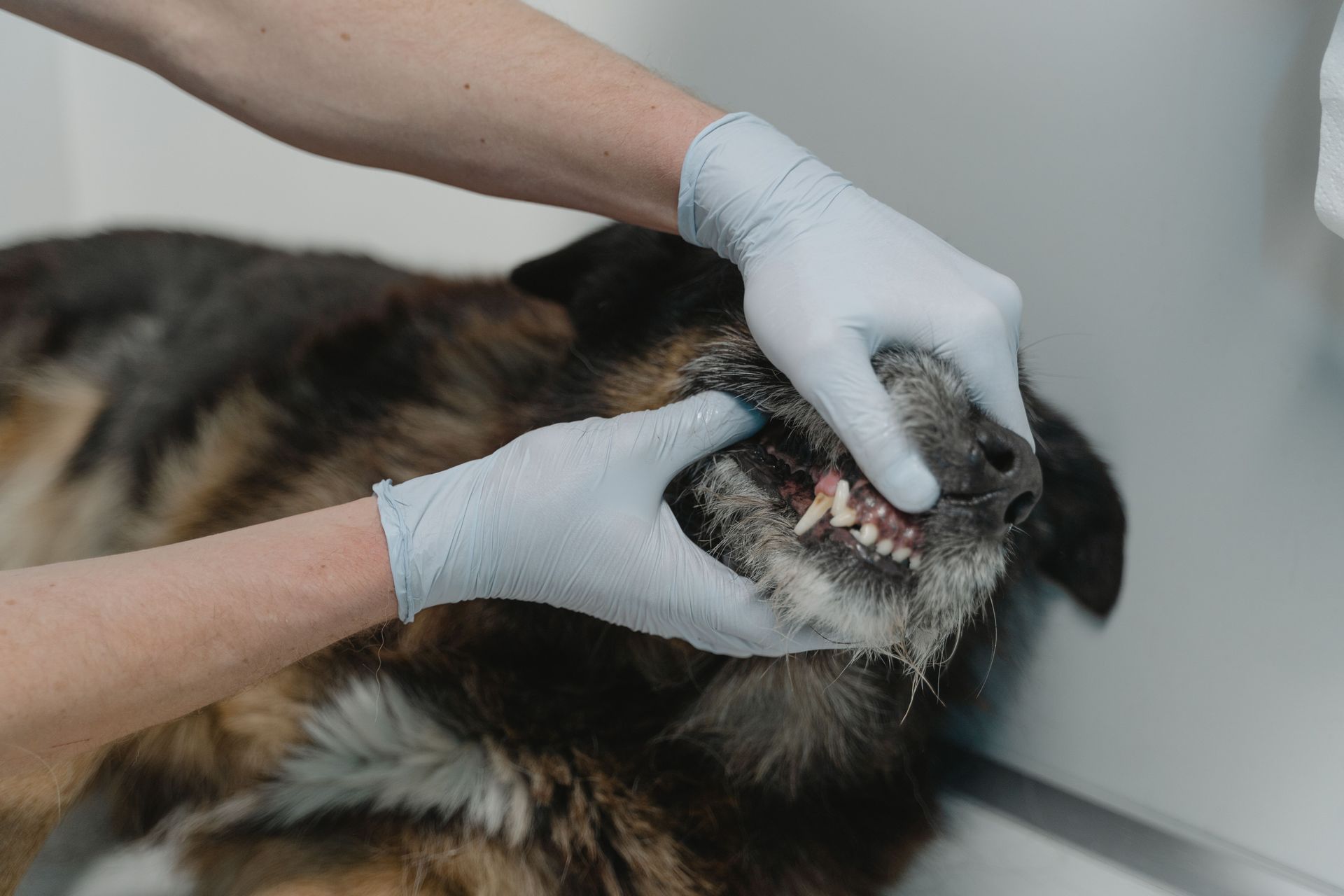
If your dog is on prevention every month, you might wonder why we still want to test every year. Doses get missed, and dogs are experts at spitting chews into the couch cushions. A yearly test is a few drops of blood and a few minutes in the lab, and it tells us the prevention is doing its job. It also catches an infection early, when treatment is shorter, easier on the dog and less expensive.
Treatment for an infected dog is possible, and we are glad it is, but it is a months-long process with injections, strict rest and real cost. Compared with that, a year of prevention is a bargain. We usually run the heartworm test as part of your dog's annual wellness exam, along with the stool check for intestinal parasites, so it is one visit rather than two.
Picking a preventive that fits your pet
There is no single right product. For dogs there are monthly chews, some of which also cover fleas, ticks or intestinal worms, and there is an injection given here at the clinic that covers months at a time for families who would rather not remember a monthly dose. For cats the options are mostly monthly topicals and chews. We match the product to your pet's weight, lifestyle and any other medications, and most of them are stocked in our in-house pharmacy or can be set up on autoship so you never run out. You can read more about our approach on our parasite prevention page.
The short version
Heartworm is common here, it is spread by mosquitoes that do not take a real winter break, and the preventives only protect the month that already happened. Keep dogs and cats on prevention every month of the year, and let us run that quick yearly test on your dog. If you are not sure whether your pet is current, or you have a new puppy or kitten who has not started yet, give us a call and we will get you sorted out.